
DeepNex Consulting · October 31, 2026
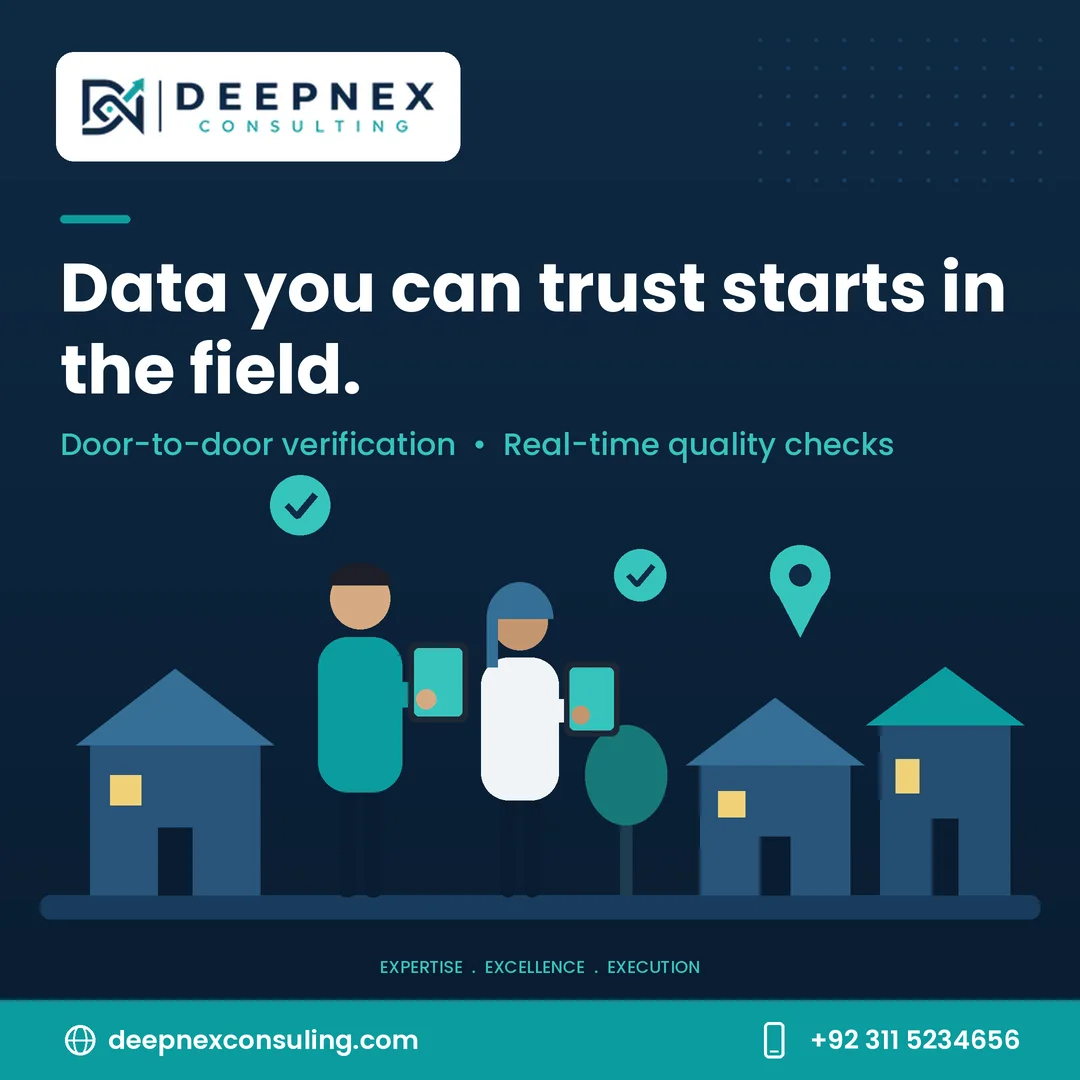
- third-party monitoring
- TPM
- monitoring and evaluation
- M&E Pakistan
- field verification
- donors
Donors, government departments and large NGOs often fund work in places their own staff cannot visit regularly. Distance, security restrictions, travel approvals and sheer scale all get in the way. Third-party monitoring (TPM) fills that gap: an independent team visits sites, speaks to beneficiaries and checks records, then reports what it finds.
Done well, TPM gives funders confidence and gives implementers useful, early feedback. Done badly, it becomes a box-ticking exercise that produces long reports and little learning. This guide explains what TPM involves, when it makes sense, and how to choose a monitoring partner in Pakistan.
What is third-party monitoring?
Third-party monitoring is the collection and verification of information about a project by an organisation that is independent of both the funder and the implementer. Its core purpose is to answer simple questions credibly:
- Did the planned activities happen, where and when they were reported?
- Did the intended people receive the support, in the quantity and quality promised?
- What do beneficiaries and communities say about it?
- Are there risks, such as safety, safeguarding or misuse of resources, that the funder should know about?
TPM is related to, but different from, evaluation. Monitoring tracks implementation as it happens. Evaluation, usually at mid-term or endline, judges results and value against criteria such as the OECD DAC evaluation criteria of relevance, effectiveness, efficiency, impact and sustainability. Many programmes use both.
When do organisations in Pakistan need TPM?
TPM is most useful when:
- Access is limited. Projects in remote districts, insecure areas or places where travel needs special permission.
- Programmes are large or dispersed. Hundreds of schools, health facilities, water schemes or cash recipients spread across provinces.
- Funds pass through several partners. Each layer between funder and community adds reporting risk.
- Emergency response. After floods or other disasters, aid moves fast and independent verification helps catch problems early.
- A donor requires it. Many institutional funders include independent monitoring in their agreements.
What a good TPM assignment includes
A clear monitoring framework
Start with the project's logframe or results framework. Agree which activities and outputs will be verified, which indicators matter, and what counts as "verified", "partially verified" or "not verified". Without agreed definitions, findings are easy to dispute.
A sound sampling approach
It is rarely possible to visit every site. Choose sites with a documented method, such as random selection within strata like district or partner, plus a small number of purposive visits to high-risk locations. The aim is a representative picture, not the biggest possible number of visits.
Several sources of evidence
Strong TPM triangulates:
- Site observation using structured checklists, with photos and GPS where appropriate and permitted.
- Beneficiary interviews, short and focused, in the respondent's language.
- Key informant interviews with local officials, staff and community leaders.
- Document review, such as distribution lists, attendance registers and stock records.
When these sources agree, findings are robust. When they disagree, that disagreement is itself a finding worth reporting.
Digital data collection with verification
Using tools such as KoboToolbox or ODK, monitors record timestamps and locations automatically, and supervisors review submissions daily. This makes it far harder to fake visits and much faster to spot problems.
Safe and ethical practice
Monitors should obtain informed consent, protect personal data, follow safeguarding procedures and have a clear way to escalate serious concerns, such as abuse or fraud, to the funder immediately rather than waiting for the report.
Reporting that leads to action
Good TPM reporting is short and timely. A typical rhythm is a brief site-level flag for urgent issues, a periodic summary dashboard, and a consolidated report with prioritised recommendations. Each issue should be tracked until the implementer responds.
Common pitfalls to avoid
- Treating TPM as policing. If implementers see monitors only as auditors, they hide problems. Frame TPM as shared learning, while keeping it independent.
- Checklists that are too long. Monitors with a 40-page tool spend their visit filling forms rather than observing.
- Late reports. Findings delivered months after the visit are rarely useful.
- Weak independence. A monitor who is paid by, or closely linked to, the implementer cannot give a credible view. Declare conflicts of interest up front.
How to choose a third-party monitoring partner
When comparing firms, ask:
- Independence: Do they have any relationship with the implementing partners?
- Field reach: Can they deploy trained, local-language monitors in your districts, including women monitors where needed to speak with women respondents?
- Methods: Can they explain their sampling, verification definitions and quality checks clearly?
- Data systems: Do they use digital tools with timestamps, location data and daily supervision?
- Ethics: Do they have consent, data protection and safeguarding procedures in writing?
- Reporting: Can they show a sample report or dashboard format that is short and actionable?
Frequently asked questions
What is the difference between third-party monitoring and evaluation?
Monitoring verifies implementation while it happens: whether activities, outputs and services were delivered as reported. Evaluation, usually at mid-term or endline, judges whether the programme achieved its results and why.
How often should TPM visits happen?
It depends on the project. Fast-moving or high-risk activities, such as cash distributions, may need monitoring during each round. Longer-term work, such as school or facility upgrades, may need visits at key milestones.
Can a local NGO commission third-party monitoring?
Yes. Implementers sometimes commission independent monitoring themselves to strengthen accountability and prepare for donor reviews, as long as the monitor's independence is protected.
Does TPM replace an organisation's own M&E system?
No. TPM complements internal monitoring. A good internal M&E system makes TPM cheaper and more useful because records are already organised.
See this tip and more on our Facebook, Instagram and LinkedIn pages.
Independent monitoring with DeepNex Consulting
DeepNex Consulting supports donors, NGOs and public bodies in Pakistan with independent monitoring, field verification and monitoring and evaluation, from framework design and sampling to digital field data collection and clear, action-focused reporting. Learn more about our services, the sectors we work in and our approach.
Get in touch: email [email protected], WhatsApp +92 311 5234656, or contact us online. We are based in G-7, Islamabad.